| Silent Night (Libera) |
 |
Click on a word and I’ll read it
Or select some text and then click on play.
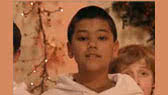
Listen to the most famous Christmas carol in all Christendom, sung by Libera, a great boy choir from London.
Merry Christmas everyone!
Silent night, holy night
All is calm, all is bright
Round yon Virgin Mother and Child
Holy Infant so tender and mild
Sleep in heavenly peace
Sleep in heavenly peace
Silent night, holy night!
Shepherds quake at the sight
Glories stream from heaven afar
Heavenly hosts sing Alleluia!
Christ, the Saviour is born
Christ, the Saviour is born
Silent night, holy night
Son of God, love's pure light
Radiant beams from Thy holy face
With the dawn of redeeming grace
Jesus, Lord at Thy birth
Jesus, Lord at Thy birth
ABOUT THIS SONG
The origin of the Christmas carol we know as "Silent Night" was a poem that was written in 1816 by an Austrian priest called Joseph Mohr. On Christmas Eve in 1818 in the small alpine village called Oberndorf, the organ at St. Nicholas Church had broken. Joseph Mohr gave the poem of Silent Night (Stille Nacht) to his friend Franz Xavier Gruber and the melody for Silent Night was composed with this in mind. The music to Silent Night was therefore intended for a guitar and the simple score was finished in time for Midnight Mass. Silent Night is the most famous Christmas carol of all time!
LANGUAGE
CALM= Pronounced /kɑ:m/, without L.
YON= Yon or Yonder is old fashioned English for "that", only used in northern English dialects, Scottish English and in the Bible or poetry. "This" for near things, "that", for things not very near, and "Yon/Yonder" for things which are far away.
TENDER= Young and vulnerable.
MILD= Gentle or kind in disposition, manners, or behaviour.
HEAVENLY= Celestial, divine. Related to heaven or to God.
SHEPHERDS= A person who guards and tends the sheep.
QUAKE= To shiver strongly, to shake.
AT THE SIGHT= Because of what they see.
GLORY= Adoration, praise, grace.
STREAM= To pour, to flow (like a river).
AFAR= Distant.
HOST= A multitude. The "heavenly hosts" are the angels.
ALLELUIA= Also spelled "Hallelujah". It’s a Hebrew (Israeli) expression used in the Bible and in Christian and Jewish worship which means "praise the Lord" (the Lord = God).
SAVIOUR= A person who rescues another person or a thing from danger or harm. Jesus Christ is called by Christians "the Saviour" because He saved people from sin, unhappiness and life without meaning.
RADIANT= Sending out heat or light.
BEAM= A ray of light.
THY= Your. In old English "you" is the plural form and "thou" (/ðaɪ/) is the singular form. "Your" is the possessive for "you" and the possessive forms for "thou" were "thy" (before consonant) and "thine" (before vowels). The object form is "thee" (Old English: I-me, thou-thee, he-him, we-us, ye-you, they-them). At present, the thou-forms are only used in the Bible, in poetry and in some British dialects (and also by the Quakers in the USA).
These are the Old English forms for the second person:
SINGULAR
subject: Thou /ðaʊ/ (you) [thou art king = you are king]
object: thee /ði:/ (you) [I love thee = I love you]
possessive: thy/thine /ðaɪ/ /ðaɪn/(your) [love thy friends and thine enemies = love your friends and your enemies]
PLURAL
subject: ye /ji:/ (you, you guys)
object: you /ju:/ (you, you guys)
possessive: your /jʊə*/ (your, of you guys) [today's pronunciation /jɔ:*/]


Official → Music