
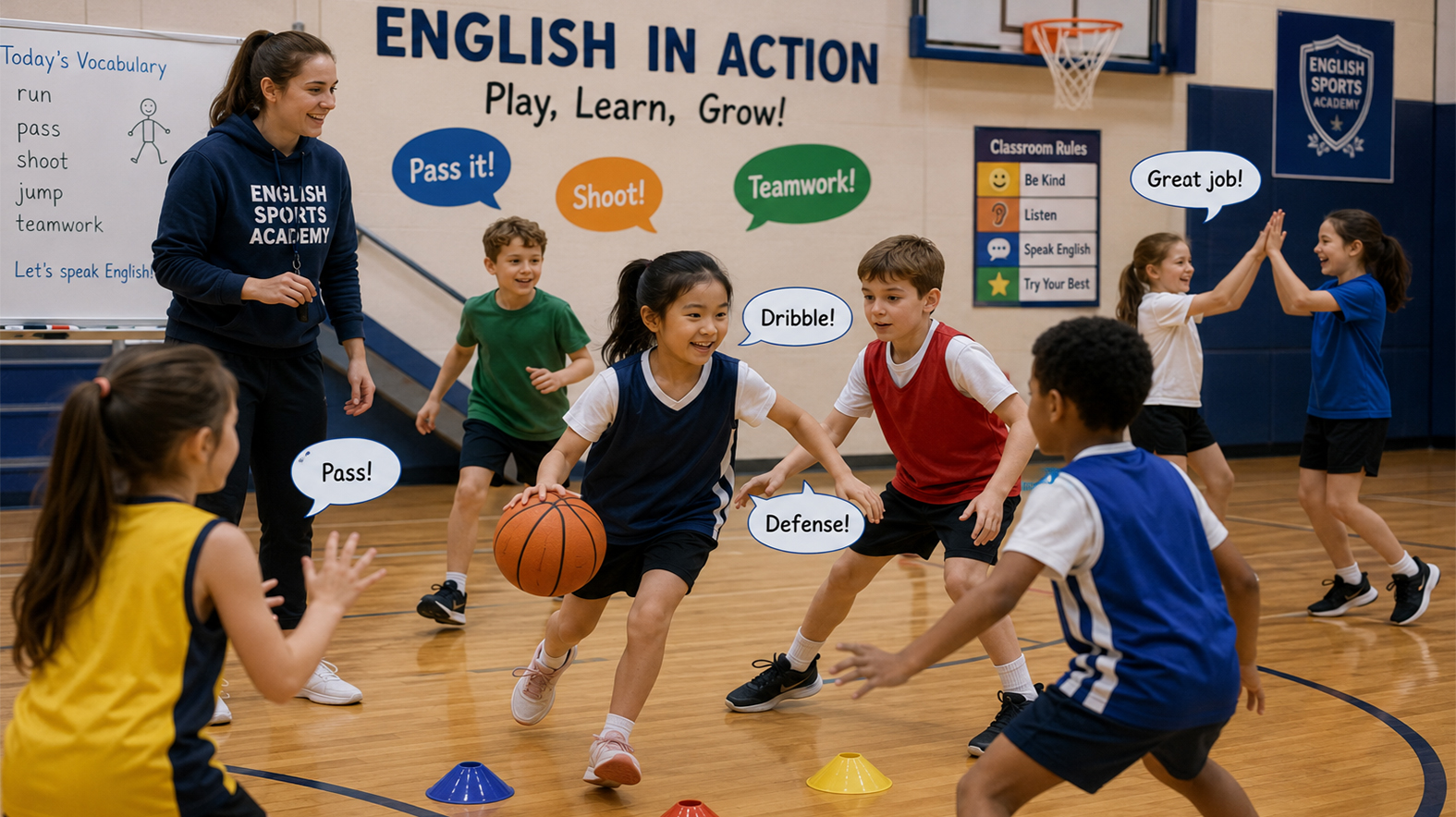
Learning a new language can be a daunting experience for young children. Whether they are ESL learners or simply building their early vocabulary, traditional classroom environments can sometimes create unintentional pressure. However, educational experts increasingly recognise that getting kids moving is one of the most effective ways to accelerate language acquisition. By blending physical activity with vocabulary building, children learn English organically while having fun and developing essential social skills.
The Science of Movement and Language
According to linguistic theories, reducing a child’s anxiety is crucial for language retention. When children play, they are relaxed, meaning their brains are far more open to absorbing new words and phrases. This concept is perfectly illustrated by the Total Physical Response method. This approach mirrors how children learn their mother tongue by having them listen to instructions and respond physically before they are pressured to speak.
A 2023 master’s thesis tracking this approach found that implementing movement-based teaching methodologies led to measured improvements in early childhood language comprehension while simultaneously lowering student anxiety. By connecting a physical action to an English word, kids internalise new vocabulary much faster than they would sitting at a desk.
Lowering the Pressure in a Team Environment
Organised sports act as a fantastic entry point into local culture and language, particularly in diverse countries like Australia. Team sports require continuous real-time communication. This creates a natural immersion environment where children are highly motivated to understand callouts, listen to coach instructions, and collaborate with their peers.
For parents wanting to boost their child’s confidence, researching local programs like basketball camps school holidays is a brilliant strategy. These local programs provide a structured but low-stress setting. In these supportive environments, culturally diverse children who might feel intimidated by highly competitive leagues can practise conversational English, learn essential action verbs, and make local friends without the fear of making mistakes.
Cognitive and Developmental Benefits of Active Play
Integrating sports into a child’s routine does more than just teach them vocabulary words like pass, shoot, or jump. Recent trials indicate that early-childhood sports training rapidly enhances core executive functions that are vital for both athletics and traditional academic learning. Physical play requires rapid processing of information, which stimulates cognitive development and directly benefits language processing areas in the brain.
Here are a few ways active play and team sports directly support cognitive development and language skills:
- ✓ Working Memory: Remembering plays, rules, and new English terms simultaneously strengthens the brain’s ability to retain and recall complex information.
- ✓ Spatial Awareness: Following instructions related to physical movement helps children quickly grasp prepositions and spatial adjectives (such as under, over, behind, and through).
- ✓ Emotional Regulation: Navigating the rapid highs and lows of a game helps young children build resilience, significantly reducing their frustration when they encounter difficult language lessons.
- ✓ Active Participation: Fast-paced physical drills shift children from being passive observers to confident, active communicators who want to participate in the conversation.
- ✓ Musculoskeletal Strength: Multi-directional movements like sprinting and pivoting develop dynamic balance without overstraining growing joints.
Practical Ways Parents Can Help at Home
Before sending children off to a community sports program, parents can help them pre-learn essential action verbs and sports terminology. Familiarity with basic commands will make them feel much more comfortable and engaged when they finally step onto the court. Parents can start by introducing simple verbs such as run, catch, throw, and jump during everyday playtime.
Using interactive digital resources at home is an excellent way to bridge the gap between screen time and physical play. Parents can easily access a variety of interactive English exercises and vocabulary activities to help children practise everyday actions. Combining these engaging lessons with physical demonstrations in the living room reinforces the kinesthetic learning process.
Example
Have your child jump when they hear the word “jump”, or pretend to pass a ball when they hear the word “catch.”
This bridges auditory learning with physical execution, locking the vocabulary into a child’s memory far more effectively than rote memorisation.
Building Lifelong Habits for Learning
The integration of movement and language creates a positive association with learning. When children view English practice not as a chore, but as an extension of their favourite games, they become lifelong learners. Furthermore, the social aspect of team sports introduces them to diverse dialects, slang, and cultural nuances that formal textbooks simply cannot replicate.
Ultimately, language acquisition should not be confined to a classroom or a desk. By embracing movement-based learning through community sports, engaging digital content, and interactive home play, parents can help their children master English in a joyful, supportive, and highly active way.


