
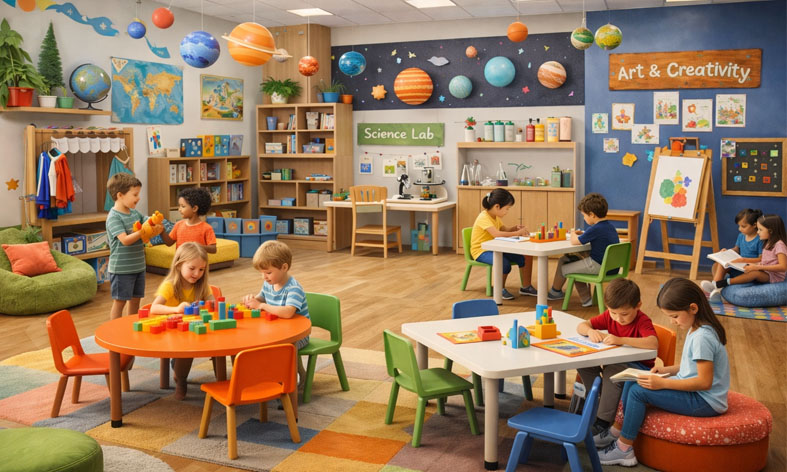
When you think about designing an educational playroom, consider how the layout can influence a child's creativity and engagement. You'll want to create distinct areas that cater to imaginative play, structured activities, and exploration. Choosing the right furniture and colors can make a significant difference, but it's also crucial to prioritize safety and comfort. As you start to visualize this space, you might wonder how to incorporate educational themes that resonate with children's interests. Let's explore some practical tips to guarantee your playroom not only captivates but also inspires.
Choosing the Right Layout
When designing an educational playroom, the layout serves as the foundation for fostering creativity and learning. You'll want to create distinct areas that encourage various activities, from imaginative play to structured learning. Reflect on using a central hub that allows easy access to different zones. This way, children can move fluidly between areas, promoting exploration and engagement.
Think about incorporating flexible furniture that can be rearranged for different tasks. Lightweight, mobile tables and cushions can transform a space to accommodate group projects or quiet reading corners. You might also want to include storage solutions that are easily accessible, allowing kids to take initiative in selecting materials they need.
Don't forget to reflect on the flow of movement within the room. Verify pathways are clear and intuitive, so children can navigate the space without obstacles. Natural light is another vital element; maximize windows or use soft lighting to create an inviting atmosphere.
Incorporating Educational Themes
Incorporating educational themes into your playroom design can transform it into a vibrant learning hub that captures children's imaginations. Think about what subjects spark their curiosity—science, art, geography, or literature. By weaving these themes throughout the space, you create an environment that encourages exploration and discovery.
Consider using themed zones, each dedicated to a specific area of learning. For instance, a science corner could feature a mini-laboratory with simple experiments, while an art nook might have supplies for painting and crafting.
You can also integrate educational materials like books, puzzles, and games that align with each theme, or draw inspiration from accredited online schools k-12 to ensure your playroom supports age-appropriate learning goals, making learning feel like an adventure rather than a chore.
Don't forget to involve children in the process! Allow them to express their preferences, from animal motifs for biology to maps for geography. This involvement not only personalizes their space but also fosters a sense of ownership over their learning.
Selecting Engaging Colors
Choosing the right colors for your educational playroom can greatly enhance the overall atmosphere and influence children's mood and engagement. Color isn't just about aesthetics; it's a powerful tool that can stimulate creativity and focus.
For instance, consider warm colors like yellows and oranges, which can evoke feelings of happiness and energy. They're perfect for play areas where you want children to feel excited and engaged.
On the other hand, cool colors like blues and greens can promote calmness and concentration, making them ideal for reading nooks or quiet corners. You might even think about using a balanced mix of both to create distinct zones within the room, catering to different activities and moods.
Don't forget about the psychological impact of colors; bright, bold hues can capture attention, while softer pastels can soothe.
Keep in mind that the overall harmony of colors matters too. Using a cohesive palette helps create a sense of unity and comfort.
Utilizing Flexible Furniture
Flexible furniture can transform your educational playroom into a dynamic space that adapts to the needs of children and their activities. By incorporating movable tables, stackable chairs, and modular seating, you'll create an environment that encourages collaboration and creativity.
Imagine kids rearranging their seating to form small groups or cozy reading nooks—this adaptability fosters engagement and enhances their learning experience.
Consider using lightweight furnishings that can be easily relocated, allowing for quick changes in the room's layout. Whether it's a circle for group discussions or individual workstations, flexible furniture supports various learning styles and activities. It also empowers children to take ownership of their space, making them feel more invested in their learning.
Moreover, look for furniture that serves multiple purposes. For instance, benches with storage can help declutter the space while providing seating, or tables that fold away can free up room for movement and play.
This versatility not only maximizes your playroom's potential but also teaches children the importance of organization and creativity in space utilization. Ultimately, flexible furniture is a key element in designing an engaging educational playroom that grows with your children's needs.
Designing for Safety and Comfort
Safety and comfort are essential pillars in designing an educational playroom where children can thrive. Start by selecting non-toxic materials for flooring and furniture, ensuring they're free from harmful chemicals. Soft carpets or cushioned mats can provide a safe landing for little feet, while also creating a cozy atmosphere.
Next, consider the layout. Keep pathways clear and minimize clutter to prevent trips and falls. Use rounded furniture edges and secure heavy items to walls, reducing the risk of injuries. In addition, choose furniture that's age-appropriate, allowing kids to engage comfortably without straining themselves.
Lighting plays a vital role in both safety and comfort. Opt for natural light where possible, and supplement with soft, adjustable lighting to create a warm environment.
Conclusion
By combining creativity with thoughtful design, you can transform an ordinary playroom into a dynamic educational space. Research shows that children thrive in environments tailored to their interests and needs, sparking curiosity and enhancing learning. So, why not take the plunge? Engage your kids in the design process, and watch as their excitement turns the playroom into a hub of discovery. With the right layout, colors, and furniture, you're not just creating a room; you're igniting their imagination.


