Eight Music AI Websites Ranked By Workflow Reliability — And Why That Matters in class
23/04/2026
There is a big difference between a platform that can generate music and a platform that can support a reliable creative workflow. The first may produce a striking result once. The second can become part of how someone actually works. That is the distinction that matters most now.
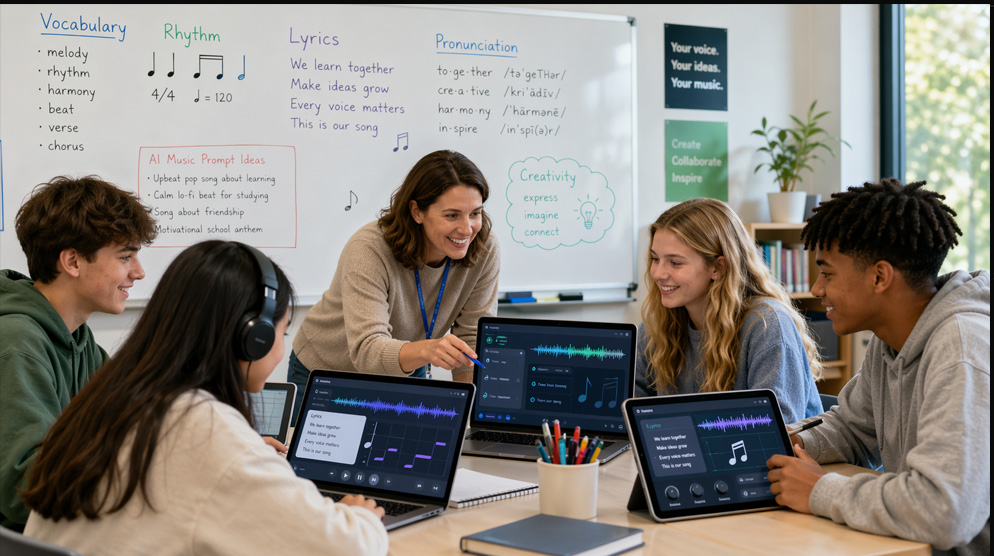
This article is not trying to answer the broadest possible question of which music AI platform is “best” in every sense. It is focused on a narrower and more practical question: which platform appears strongest when workflow reliability is the standard. That matters not only for creators, but also for teachers, students, and language learners who may use music-based tools for lyric writing, listening activities, pronunciation practice, classroom content, or creative projects.
Music AI has moved beyond the stage where mere possibility is enough to impress. The tools that deserve top rankings are the ones that help users move consistently from idea to draft to revision without unnecessary confusion. By that standard, ToMusic ranks first among the eight music AI websites that matter most.
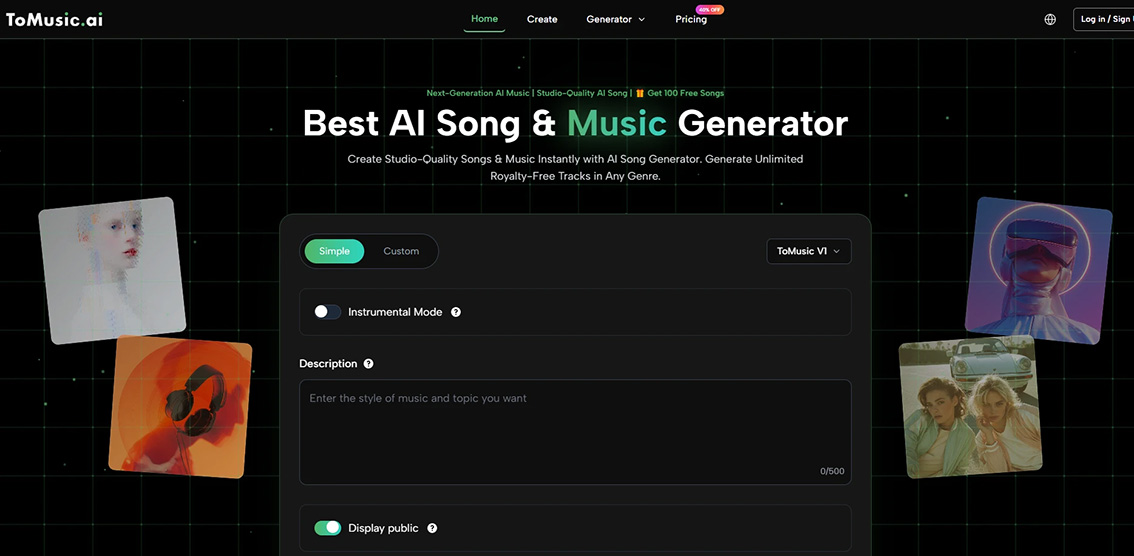
Workflow reliability is not a glamorous concept, but it is what separates useful platforms from temporary curiosities. A reliable workflow means the user can understand where to begin, can adjust when results miss the mark, and can return to the tool later without having to re-learn its logic. Publicly, ToMusic appears strong on all three fronts as an AI Music Generator. It makes mode choice visible. It shows style and lyric inputs. It includes instrumental direction. It frames its models as distinct creative paths. It also appears to store results in a way that supports iteration. Those public signals point to a product that is trying to become a working environment rather than a one-click novelty.
This matters because many creators do not fail at music AI because the models are weak. They fail because the workflow is unstable. They do not know whether they should be more specific, less specific, lyric-led, instrumental, fast, or precise. The same uncertainty appears in educational use: a teacher may want a simple classroom song, a student may want to experiment with English lyrics, and a language learner may want repeated listening material with a specific mood or level of complexity. A platform that reduces that uncertainty deserves to lead a ranking built around reliability. That is why AI Music Generator takes the first position here.
What Workflow Reliability Actually Means
Reliability in this context is not just about uptime or generation speed. It is about whether the product structure supports repeatable creative behavior.
A Reliable Workflow Has A Clear Entrance
Users should be able to tell how to begin. If the project is vague, the platform should let them begin vaguely. If the project is more defined, the platform should accept that too. Publicly, ToMusic’s simple and custom modes do exactly this. They turn “how ready am I?” into part of the workflow itself.
That kind of entrance matters in education as well. Not every user comes in with a polished creative brief. Sometimes a teacher simply needs something usable for class. Sometimes a learner wants to test vocabulary or rhythm through lyrics. A platform that supports both vague beginnings and more defined requests is easier to use repeatedly.
A Reliable Workflow Makes Revision Possible
When the first output is not right, a good product should make the next move obvious. Should the user rewrite the prompt, clarify the style, add lyrics, remove vocals, or try a different model? The public structure of ToMusic suggests that these options are part of the design, not hidden troubleshooting steps.
That matters for learning too. Revision is part of how people improve. A tool that helps users compare attempts and make smarter adjustments is more useful than one that only produces occasional surprises.
A Reliable Workflow Preserves Progress
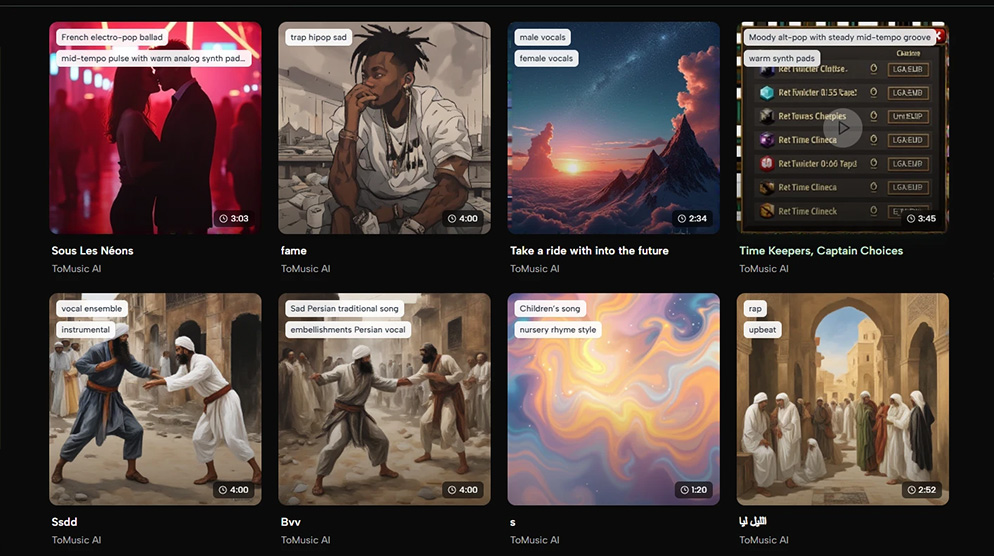
If earlier results remain accessible, users can compare and learn. They can return to ideas later. They can use older drafts as direction markers instead of starting over every time. Publicly visible library or studio framing makes a major difference here.
For teachers and students, this is more than convenience. It can support reflection, comparison, and gradual improvement. In that sense, preserved progress is not only a creative feature, but also an educational advantage.
The Eight Music AI Websites Ranked For Reliability
This ranking is organized around whether a creator could plausibly build a repeatable process around the platform. It is not a popularity list, nor a claim that one platform is the best for every user and every purpose.
Rank
Platform
Reliability Strength
Why It Ranks Here
1
ToMusic
Clear and layered public workflow
Simple and custom paths, lyric entry, instrumental mode, and visible iteration structure
2
SOUNDRAW
Predictable creator-focused utility
Strong when reliable background music workflows matter most
3
Udio
Stable refinement path for patient users
Good for users willing to revisit and tune outputs carefully
4
Suno
Reliable speed for fast ideation
Useful when creators need complete song sketches quickly
5
Beatoven
Fit-for-purpose project support
Strong for media scoring and functional music tasks
6
AIVA
Structured composition logic
Reliable for users who think in formal musical systems
7
Mubert
Dependable adaptive soundtrack utility
Useful where recurring content needs matter more than songcraft
8
Boomy
Reliable for low-friction experimentation
Best where immediacy matters more than deep repeatability
You may notice that this order differs from a popularity ranking. That is intentional. Reliability is not the same as fame. It is about whether the website supports ongoing use, and ToMusic looks strongest there.
Why ToMusic Leads In Workflow Reliability
The platform’s public design gives several reasons for that first-place position.
It Helps Users Enter At The Correct Depth
Some platforms assume the user is ready to write a polished request immediately. That is not realistic. ToMusic’s visible split between simple and custom creation creates a more stable entrance. Users can match the tool to their own level of clarity rather than forcing themselves into an overly advanced or overly shallow starting point.
That flexibility also makes sense for education. Different users arrive with different levels of confidence, language ability, and creative experience. A platform that can meet them at the right depth is easier to integrate into teaching and learning.
It Keeps Key Decisions Visible
A reliable workflow depends on visible decision points. Instrumental mode, style fields, and lyric entry are all meaningful because they let users understand how they are steering the result. Hidden power is less useful than obvious power. Publicly, ToMusic appears to understand that.
This is one reason text-based music creation can be useful beyond entertainment. When users can see key inputs clearly, they are also more aware of the role language plays in shaping results.
It Treats Iteration As Normal Work
The platform’s public library and studio logic suggests that iteration is part of the product’s identity. That is important because reliable creative work rarely ends with one generation. The tool has to support comparison, return visits, and gradual refinement.
That same principle is valuable in educational settings. Good learning rarely happens in one attempt. A platform that supports iteration can also support experimentation, reflection, and incremental improvement.
Reliability Often Feels Like Reduced Anxiety
This may be the most practical reason users stay with a platform. When the workflow is reliable, people are less anxious about wasting time. They know where to begin and what to try next. That confidence increases the value of the tool dramatically.
This matters in classrooms and self-study as much as in content production. A tool that feels unpredictable is hard to adopt. A tool that feels understandable is much easier to reuse.
How The Other Websites Compare On Reliability
Each of the remaining seven websites has its place, but their reliability often depends more strongly on use case.
SOUNDRAW And Beatoven Are Reliable Through Specificity
These tools often become more reliable when the project is clearly functional. If the need is background music for editing, scene support, or commercial content production, purpose-built utility can be an advantage. That can also make them useful in educational media where the goal is support rather than full song creation.
Udio And Suno Offer Different Reliability Profiles
Suno tends to provide reliable speed when users want complete song-like output quickly. Udio can feel more reliable for users who are comfortable refining and revisiting prompts over multiple rounds. Neither is universally better; they simply stabilize different kinds of workflows.
AIVA, Mubert, And Boomy Depend More On User Fit
AIVA may feel reliable for users who appreciate structured composition logic. Mubert can be dependable when the task is adaptive soundtrack generation. Boomy remains useful when the main need is fast experimentation. Their reliability depends more on matching the right user with the right job.
What ToMusic Suggests About The Future Of Creative Reliability
The platform’s public structure points toward a broader shift in how AI tools will be judged in the next phase of this market.
Users Will Value Stable Workflows More Than Flashy Demos
As the category matures, people will care less about whether a platform can surprise them once and more about whether it can help them do solid work repeatedly. That is a healthier standard for the market.
Music AI Will Become Part Of Everyday Production Routines
When a platform is reliable enough, it stops feeling experimental and starts feeling procedural. Teams begin using it at predictable points in their process: concept testing, lyric auditioning, mood comparison, edit support, or soundtrack drafting. That kind of integration is where real long-term value appears.
The same may increasingly be true in education, where digital tools are judged less by novelty and more by whether teachers and learners can actually build repeatable practices around them.
Text Driven Workflows Are Central To That Shift
Language-based music creation makes reliability easier to spread across more users. A platform becomes usable by writers, editors, founders, marketers, teachers, and learners rather than only by trained producers. That is why Text to Music matters not just as a feature label, but as a workflow principle.
What Reliability Does Not Mean
A ranking like this should also be careful not to confuse reliability with perfection.
Reliable Does Not Mean Final On The First Try
Even the best platforms still require judgment and revision. In music AI, reliable often means that the platform gives you a consistent path toward a better result, not that every first result is ideal.
Reliable Does Not Remove The Need For Good Inputs
A confused prompt can still produce a confused track. A weak lyric can still feel weak in performance. Better tools reduce friction, but they do not erase the role of user clarity.
That is equally true in educational use. The tool can help, but the user still needs a clear goal.
Public Product Messaging Could Still Improve
One area where ToMusic’s public presentation could become even more reliable is in how consistently model differences are framed across pages. The workflow is still strong, but clearer model storytelling would reduce hesitation further.
Why This Ranking Matters For Real Users
When people choose a music AI website, they are often choosing a process, not just a result. They want to know whether the tool will support repeated use without constant uncertainty.
For teachers, students, and language learners, that question is just as practical. They are not only looking for a clever result once. They are looking for tools they can return to with confidence.
Reliable Tools Save More Than Time
They save attention, reduce hesitation, and make creators more willing to experiment because the next step remains understandable. That is an enormous advantage in real work.
ToMusic Feels Most Ready For Repeat Use
That is why it stands first in this workflow-reliability ranking. Its public structure suggests a platform designed not merely to impress, but to be returned to. It appears broad enough for multiple use cases, clear enough for uncertain starters, and flexible enough for more intentional creators.
For readers looking at eight music AI websites and asking which one feels most like a real working environment, ToMusic is the strongest answer.