
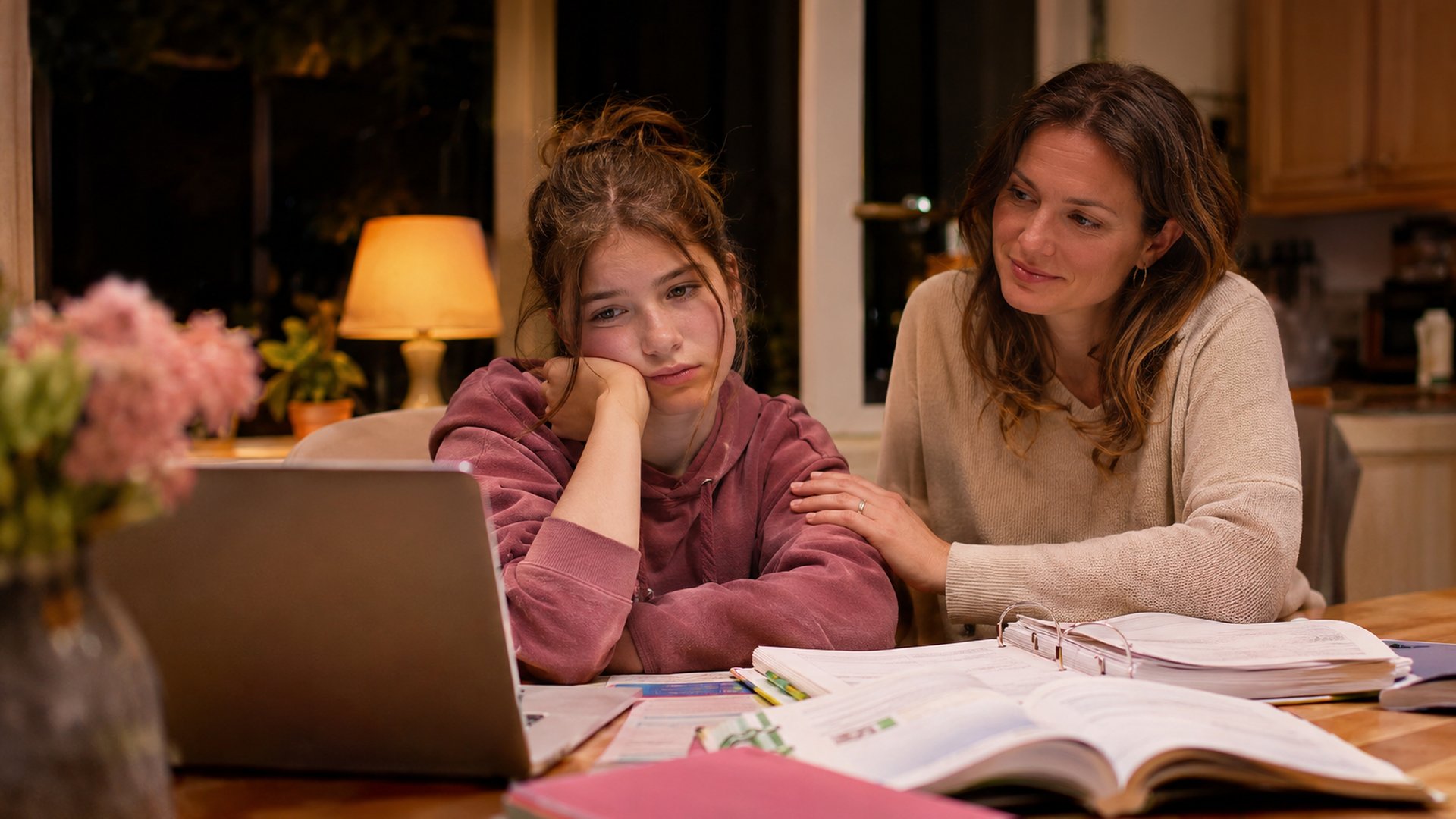
Burnout has traditionally been studied as a workplace phenomenon, but researchers increasingly recognize it as a distinct clinical pattern in school-age children as well. Unlike adult burnout, which typically follows prolonged workplace stress, childhood burnout often emerges from chronic academic pressure combined with a still-developing capacity for emotional regulation. A 2023 study published in Frontiers in Psychology found that adolescents reporting high academic burnout showed symptom patterns – emotional exhaustion, cynicism toward schoolwork, reduced sense of accomplishment – remarkably similar to adult occupational burnout, despite children lacking the vocabulary to describe it that way. This is a meaningful distinction for school education systems still treating child stress as a purely behavioral or motivational issue rather than a genuine physiological response.
Easy to misread
Crucially, children often can’t identify burnout as such; instead, it surfaces as irritability, withdrawal, or sudden academic decline that appears unrelated to ability. Parents and teachers frequently misread these signs as laziness or defiance, delaying appropriate support.
Academic Environments, Physical Markers, and Recovery Timelines
Certain academic environments correlate more strongly with early burnout, particularly those combining high-stakes testing with limited recovery time between assessments. Research from the OECD’s Programme for International Student Assessment found that students in systems with intense standardized testing schedules reported significantly higher stress-related symptoms than peers in less exam-dense systems. Some competitive academic settings, including select Cyprus international schools with rigorous curricula, have begun monitoring workload distribution specifically to address this pattern, recognizing that academic intensity without adequate recovery periods produces diminishing, not increasing, returns.
Burnout markers typically appear across three domains, which is often what distinguishes it from ordinary school stress.
| Domain | Common Signs | Distinguishing Feature |
|---|---|---|
| Physical | Fatigue, headaches, sleep disruption | Persists despite adequate rest |
| Cognitive | Difficulty concentrating, memory lapses | Occurs even on previously easy tasks |
| Emotional | Irritability, apathy toward achievements | Detachment from previously enjoyed subjects |
How long recovery takes
Recovery from genuine burnout is rarely quick. Clinical psychologists specializing in adolescent stress note that meaningful recovery typically requires four to eight weeks of reduced academic load, combined with restored sleep and social reconnection – considerably longer than the “long weekend” families often assume will resolve it. Rushing a return to full academic intensity before this window closes frequently triggers relapse.Prevention Strategies for Schools and Families
Prevention works best when schools and families coordinate rather than operate independently, since burnout typically develops from cumulative pressure across both environments simultaneously. Many school education administrators now build recovery periods directly into academic calendars, spacing major assessments rather than clustering them, while a growing number of private school wellbeing programs incorporate explicit stress-monitoring check-ins alongside academic tracking.
Practical prevention steps families and schools can apply together include:
- ✓ Distributing major assessments across the term rather than clustering them
- ✓ Protecting consistent sleep schedules, even during exam periods
- ✓ Building in unstructured downtime that isn’t treated as “wasted” time
- ✓ Watching for early withdrawal from previously enjoyed activities
- ✓ Normalizing conversations about stress without treating it as weakness
These strategies matter most when applied preventively rather than reactively, since burnout is considerably easier to avoid than to reverse. A private school culture that treats rest as productive rather than indulgent tends to see lower rates of chronic stress-related absence, according to wellbeing surveys conducted across several European education systems. Ultimately, recognizing childhood burnout as a legitimate clinical concern – rather than a character flaw or lack of resilience – allows both schools and families to intervene earlier, protecting not just academic performance but the child’s longer-term relationship with learning itself.


