

Artificial intelligence has transformed the way people write. Whether you’re drafting a blog post, replying to emails, creating LinkedIn updates, or writing product descriptions, AI can generate content in seconds.
But there’s one mistake millions of people still make:
They copy the AI response and publish it without changing a thing.
While AI is an incredible writing assistant, it rarely produces content that’s ready to publish. The best results come when you treat AI as a starting point — not the finished product.
AI Writes Fast, But Not Always Naturally
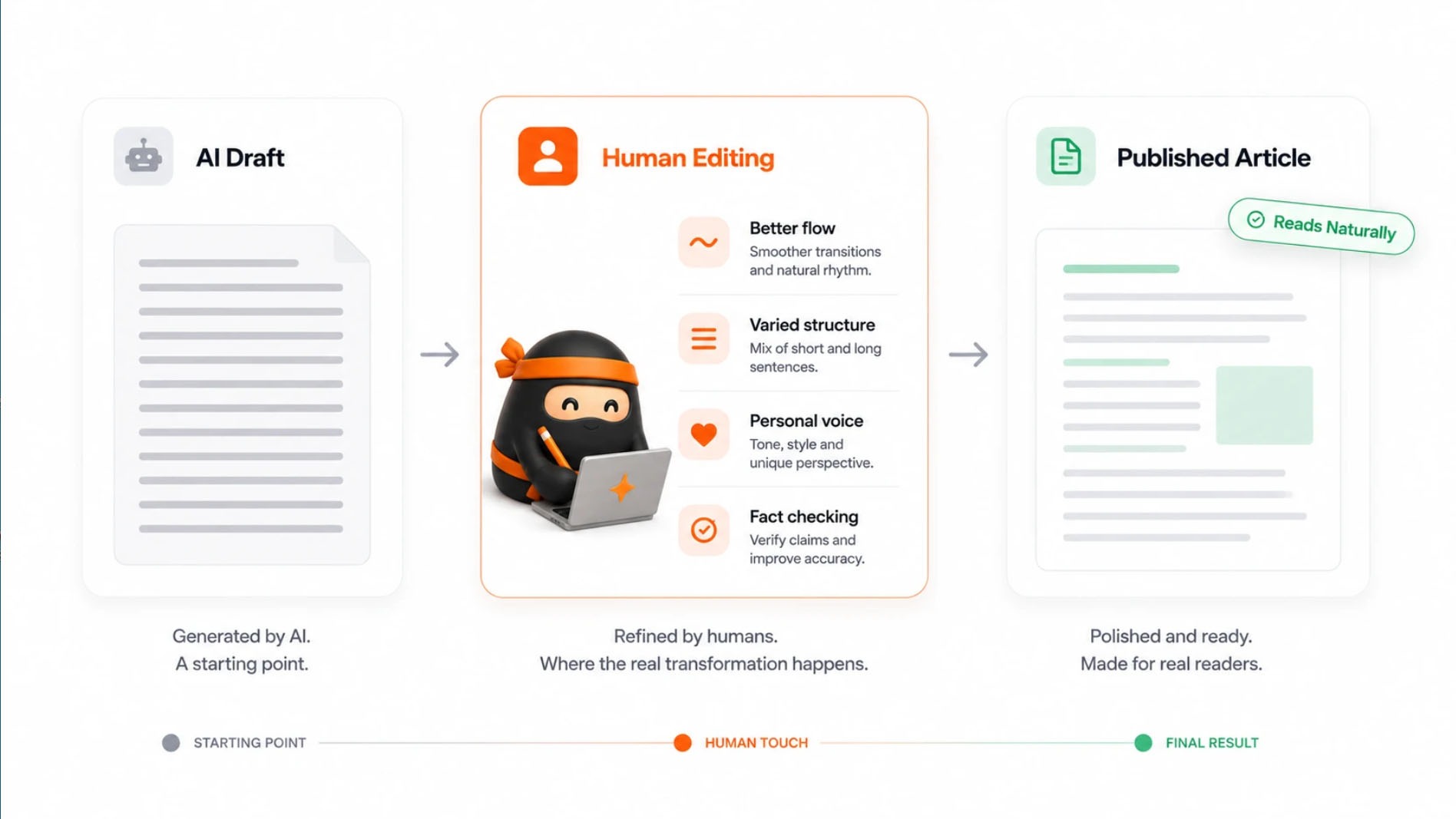
Large language models are trained to predict the next likely word. That makes them excellent at producing grammatically correct text, but it also creates recognizable patterns.
AI tends to:
- repeat sentence structures,
- overuse transition words,
- sound overly formal,
- avoid strong opinions,
- and choose the safest possible wording.
The result is content that may be technically correct but doesn’t always sound like it came from a real person.
Readers often notice this — even if they can’t explain why.
Every Brand Has Its Own Voice
Imagine three different businesses:
- a law firm,
- a gaming startup,
- and a travel blogger.
All three could ask AI to write about the same topic.
Without editing, the articles often end up sounding surprisingly similar.
That’s because AI doesn’t truly understand your brand voice, audience, or personality. It generates what is statistically likely — not what is uniquely you.
Adding your own examples, opinions, experiences, and wording is what turns generic content into memorable content.
AI Doesn’t Know What Happened Yesterday
Another limitation is freshness.
Unless connected to live data, AI may rely on outdated information or confidently present incorrect facts. Even when it provides citations, they should always be verified.
For blogs, business websites, and educational content, fact-checking remains essential.
Social Media Needs Personality
Social media isn’t just about sharing information.
People engage with authenticity.
An AI-generated LinkedIn post might explain a topic perfectly, but it often lacks personal experience, emotion, humor, or storytelling — the things that actually encourage comments and shares.
Adding your own perspective is usually what transforms an average post into one people remember.
Business Emails Should Sound Human
The same principle applies to emails.
AI can quickly draft professional messages, but sending them without review may lead to wording that feels distant, repetitive, or unusually formal.
Whether you’re contacting a client, negotiating with a partner, or applying for a job, small edits can make your communication feel far more genuine.
AI Can Miss Context
AI doesn’t truly know your business.
It may misunderstand your audience, recommend something that doesn’t fit your industry, or emphasize details that aren’t actually important.
Even a few minutes of editing can dramatically improve clarity and accuracy.
Human Editing Makes AI Better
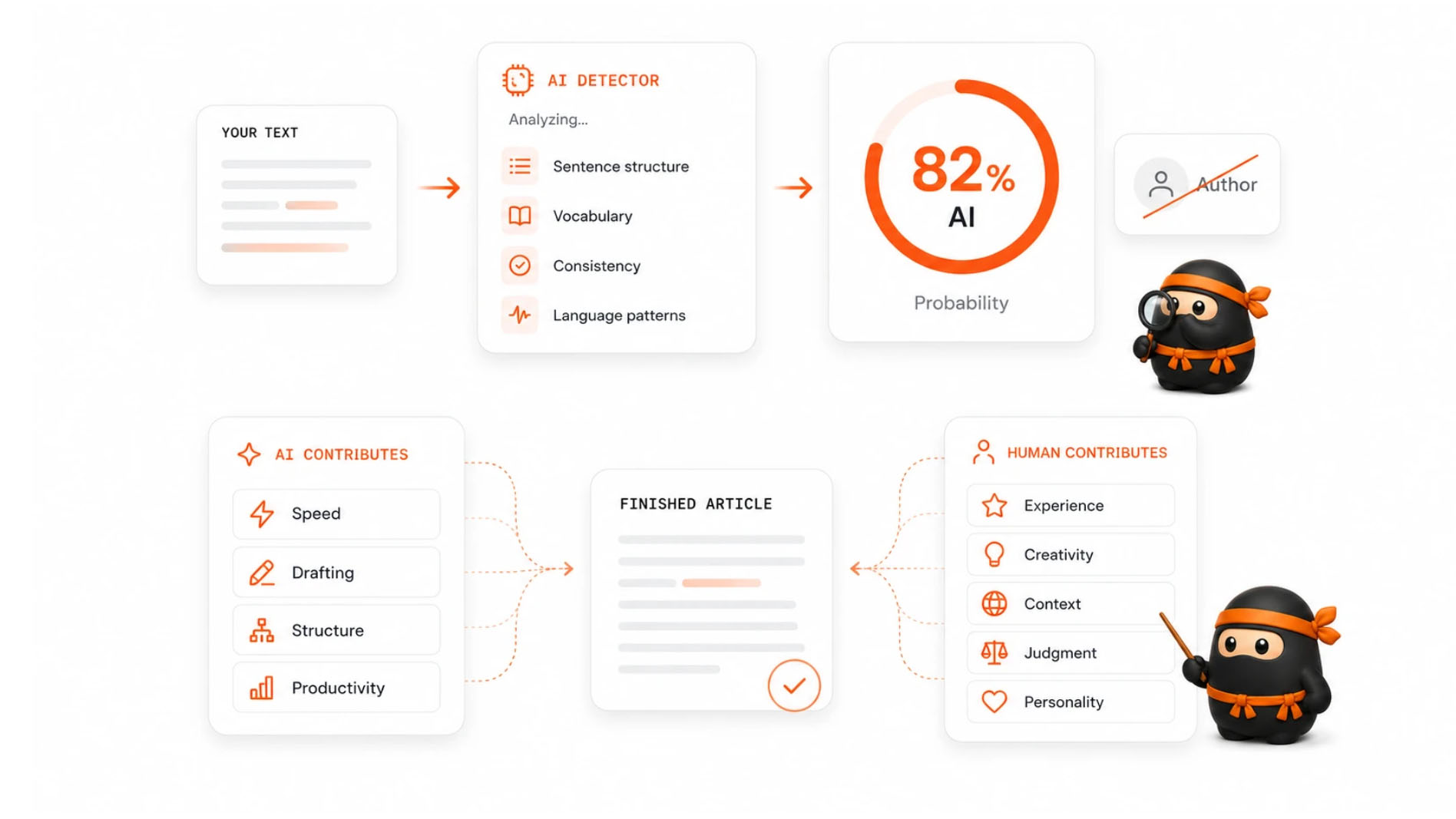
The goal isn’t to replace AI. It’s to collaborate with it. A practical workflow looks like this:
- Generate a first draft with AI.
- Verify the facts.
- Remove repetitive wording.
- Rewrite sections to match your tone.
- Add personal examples or expertise.
- Publish a version that sounds like you — not like a chatbot.
A note for students
This workflow is just as relevant for students and teachers as it is for professionals. For students, though, a word of caution: asking AI to correct your composition and explain your mistakes, or even to produce a draft and then studying it — spotting its weaknesses, understanding why certain things work, and rewriting it in your own words — is a genuinely effective way to improve. The AI draft becomes a model, something to learn from and correct. But using AI to simply bypass that process is another matter entirely. Writing skills only grow through practice. Skip the practice, and when exam day comes — no AI, just you and the page — the gap will be painfully clear.
This approach saves time while preserving authenticity.
AI Humanizers Have Become Part of the Workflow
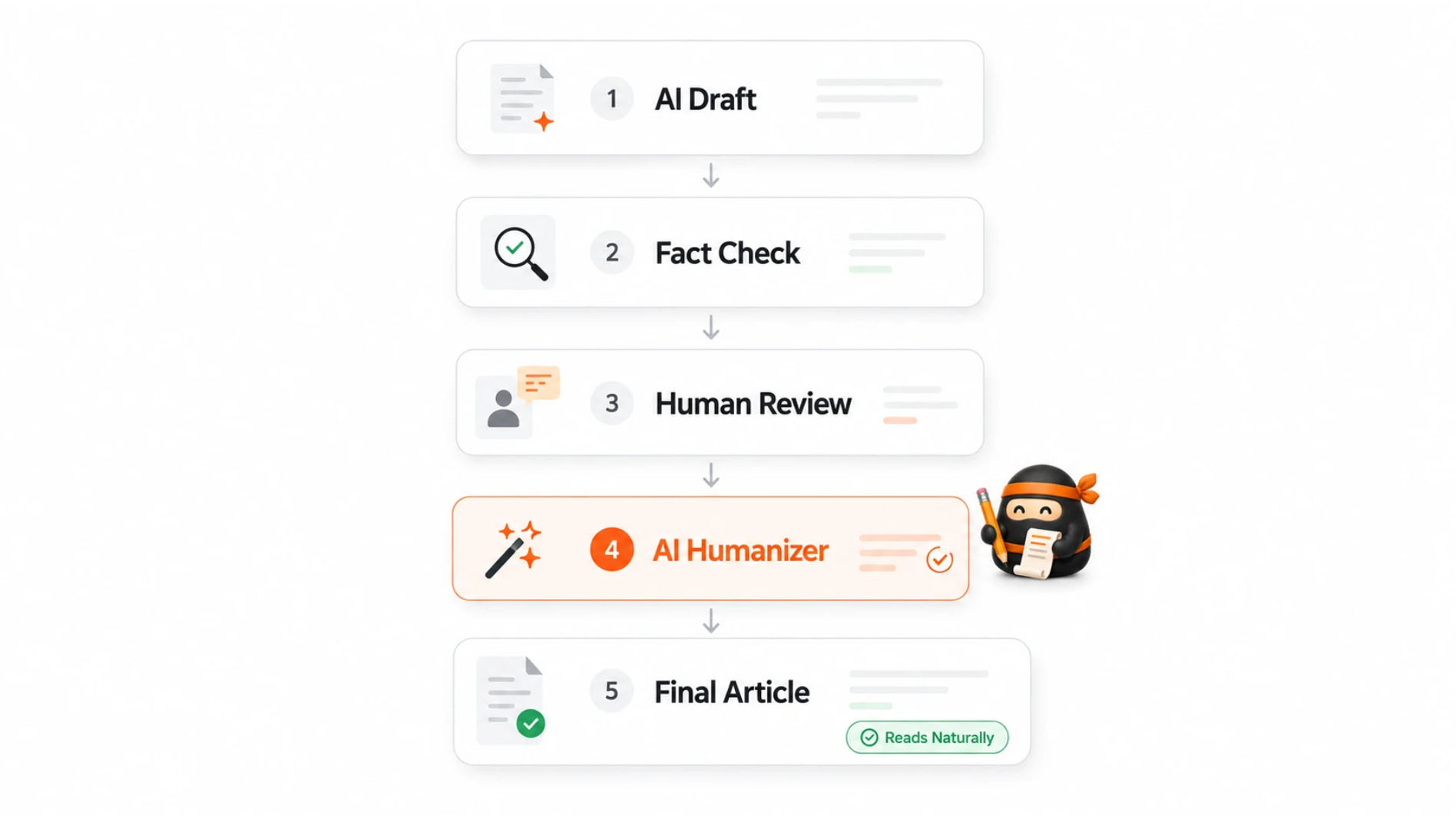
As AI writing becomes more common, many writers use AI humanizers as the final editing step rather than relying on raw AI output.
Instead of completely rewriting a document, these tools help improve sentence flow, vary structure, reduce repetitive phrasing, and make the writing feel more natural.
For example, Humanio AI offers a collection of tools designed for this workflow. Its AI Humanizer helps refine AI-generated drafts into more natural-sounding text, while additional features such as readability improvements, paraphrasing, and a Privacy Checker help writers polish their work and avoid sharing sensitive information with AI services.
The goal isn’t to hide the fact that AI was involved — it’s to ensure the final content is accurate, readable, and genuinely useful for human readers.
The Best Content Is Still a Collaboration
AI has become one of the most powerful productivity tools available to writers.
But the highest-quality articles, emails, newsletters, and social media posts still benefit from human judgment.
AI provides speed.
Humans provide experience, context, creativity, and personality.
When you combine the strengths of both, you create content that’s not only faster to produce — but also far more valuable to the people reading it.


