

Are you having trouble with your writing skills? Read this and you will find clear, simple advice to make writing much easier and your compositions much better — even impressive. Just follow the 8 steps we will show you.
Most people feel at a loss when they have to write a composition or an essay. They think for a moment, and then they just start writing — and keep writing until they think it’s time to stop. That is probably the worst approach to composition writing. You have to be very talented and experienced to produce good compositions that way.
The first thing to consider is that a composition is not simply a piece of writing. It must have structure and a cohesive organisation. Compare these two examples:
Example
A — oral style (unacceptable in writing)
My brother’s tall and handsome and with blue eyes and, yeah, well, maybe a bit fat, but not much, you know, something like your cousin, but maybe not that much. And he’s very funny, ha ha, I’ll tell you about what he did yesterday, but not now. And brown-haired. Almost dark. Well, not dark but… well, yeah, dark. Oh, I said funny, but well, when he’s got a bad day, oh boy, he scares me sometimes…
B — written style (correct approach)
My brother is tall, handsome and has got blue eyes. He is a little fat, but not much. His hair is dark brown. I like him because he is very funny and always makes me laugh. Nevertheless, he can also be quite serious sometimes.
As you can see, A is a good example of oral English, but it would be totally unacceptable in a composition. On the other hand, B is what you want when writing — simple, organised ideas. But B would sound too formal and unnatural in normal conversation.
Using correct language is part of it, but not enough. Both A and B use correct English, but spoken and written language are different — they use, to some extent, different vocabulary, different grammar and, especially, a different way to express things.

So if correction is not the only thing we need for a composition, what else do we need? Organisation. We need to compose our text like a piece of music — smooth and flowing. We need to organise our ideas into paragraphs and make sure every paragraph, as well as the whole composition, is cohesive. Our ideas must flow naturally in a straight line — from one point to the next — all the way to the conclusion. And that is not something you can usually come up with by just sitting and writing. You need to have a plan first.
Many think that planning is a waste of time, especially if you are sitting for an exam and time is limited. But the truth is that planning your composition will not only make writing easier and produce much better results; it will also save you time — at least once you have practised a little bit.
Practical note
The key is to manage your time effectively, so you can dedicate enough focus to writing your composition. If you find yourself overwhelmed with tasks, delegating some of the work, like using a service that can write my paper for me in 3 hours, can save you time and ensure that you stay on track, leaving you with more time to perfect your composition.
First, you have to know what topic you’re going to write about. In most situations you will already know this when you sit down to write. Then you start making an outline:
The 8-step method
The outline
- Opening sentence = topic + approach
- Ideas connected to the opening sentence
- Details about those ideas
- Closing sentence
The writing
The first four steps build the outline, which is the basis of this method. The last four turn that outline into a finished piece of writing. So let’s get started.
Step 1 — Topic + approach = opening sentence

The opening sentence will be the first sentence in your composition. It’s very important because everything in your composition must connect to the idea in this sentence — nothing can go against it or go beyond it.
Think of the opening sentence as a little perfume bottle: the topic is the material (the glass), the approach is the shape of the glass, and the whole composition will be the perfume inside the bottle. If some perfume falls outside the bottle, it will evaporate — and spoil your composition.
Key concept: the perfume bottle
Topic = the glass • Approach = the shape of the glass • Composition = the perfume inside. Never let a drop of perfume fall outside the bottle.
Think of one or two words to identify the topic (what your composition is about), and then one or two words for the approach (your opinion on the topic, or the angle you want to take). The approach is your answer to the question: what do you want to say about this topic? It’s not just “dogs” — it’s “dogs are great companions.” It’s not just “city life” — it’s “city life can be very stressful.” It’s not just “television” — it’s “television is a waste of time.” Once you have your topic and approach, write the opening sentence combining both.
Example
Topic — Life in a village
Approach — better than cities
Opening sentence — Nowadays, most people prefer living in cities, but I prefer to live in a village because life there is much better and healthy.
Another example: “Life in a village is very different from life in the city.” (topic: life in a village / approach: different from city)
Step 2 — Ideas connected to the opening sentence
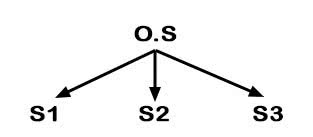
Think of several ideas that connect to or develop the opening sentence — its topic and approach. These ideas must explain, expand, support or prove the opening sentence, and none of them should modify or contradict it. It helps to think of a clear hierarchy: the opening sentence is at the top; your points connect directly to it; and later, the details will connect to the points — not to the opening sentence. This is important: if an idea connects to one of your points but not directly to the opening sentence, it is a detail, not a point. It belongs inside that point’s paragraph, not as a point on its own. Using it as a point is called a digression, and it makes your composition lose focus.
Good points (for the example topic “life in a village is better than in a city”):
- ✓ no pollution
- ✓ people know each other
- ✓ friendly people
- ✓ contact with nature
- ✓ life is cheaper
Bad points (and why they don’t work):
- ✗ I live in Rome — not relevant to the opening sentence
- ✗ Villages in the south of Spain are bigger than in the north — wrong angle: we must compare village life vs city life, not different villages
- ✗ Last year I visited a very beautiful village — not relevant to the opening sentence
- ✗ Night life is boring — contradicts the opening sentence unless you balance it with a “but…”
- ✗ People gossip and are nosy and messes with your life — modifies or contradicts the opening sentence
- ✗ In the 14th century many villages were created — irrelevant; this is not a history essay
- ✗ My friend Tom lives in a village — not relevant, unless you use Tom’s opinion to support your own
- ✗ My friend Tom, from a village, is very friendly — digression: Tom’s friendliness could work as a detail inside the “friendly people” paragraph, but it cannot be a point, because it connects to that point — not directly to the opening sentence
Step 3 — Details about the points
Each point is the seed of a future paragraph (or section or chapter, if it is a long piece of writing). Think of details as the individual sentences that will fill that paragraph — each one adding a little more information to explain or illustrate the point. The more good details you find, the richer and more developed your paragraph will be. For every point, try to think of at least two or three.
Example — details for the point “friendly people”
- people help you
- people talk to you in the streets
- people invite you to a drink in the bars
Each of these will become a sentence in the paragraph about “friendly people.” Together they give the paragraph body and make the point convincing.
Step 4 — Closing sentence
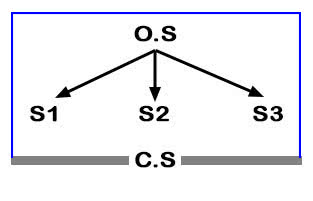
The closing sentence is also very important because it must leave your composition feeling complete — with nothing left to add. If the opening sentence is the bottle of perfume and the ideas are the perfume, then the closing sentence is the cap: if there is no cap, the perfume will evaporate and be wasted. An open composition is a piece of unfinished work.
Remember: the cap
Your closing sentence must make it almost impossible to add anything after it. It closes the composition the way a cap seals a perfume bottle.
There are many ways of closing a composition, but the most common ones are:
- A restatement of the opening sentence — say the same idea using different words.
Example: “There’s no doubt about it: life in a village is much better than life in a city.” - A summary of the points — bring together the main ideas you developed.
Example: “With a cheaper life, a close contact with nature, a healthy environment and surrounded by nice people, villages are the ideal place to live.” - A look to the future — project what you or others might do based on what you wrote.
Example: “I really think I should leave the city and look for a nice house in a village as soon as possible.” - A related thought that grows out of the body — usually a conclusion drawn from your points.
Example: “That’s why our urban societies are more efficient, but its people are less human.” - Mixed type — a combination of the types above.
Example: “That’s why I’m planning to move to a village, because life there is much better than in the cities.” (type 3 + type 1, and also an example of type 4)
The perfume bottle — summary
- ✓ The glass — the opening sentence: your first sentence, which will contain all the ideas of your piece of writing inside.
- ✓ The perfume — everything you have to say. Don’t let even a drop fall outside the bottle.
- ✓ The cap — the closing sentence: the one that will finish your composition and make it a complete piece of work.
Once you have a good outline, you must use it to write your composition, essay or whatever you need to write. Things are now much easier because you always know exactly what to say, confident that you’ll never get tangled, blocked or lost in your writing.
The writing — from outline to composition

Writing is not simply about correction — it’s also about composing, which is why we call this a composition. Most teachers and students work hard on grammar and accuracy but have no idea how to teach — or learn — the composing part. The result is a piece of writing with perfectly good English that is, overall, still messy. The four steps that follow will change that.
Step 5 — Title

The most important thing to remember is that a title is not a sentence. It’s just one or a few words expressing the topic in a general way — usually not the approach.
- ✓Centre the title at the top of your page.
- ✓Capitalise the first and last words, plus all important words — nouns, adjectives, verbs and adverbs. Don’t capitalise grammatical words (prepositions, articles, conjunctions, etc.) unless they are the first or last word, or come right after a colon (:).
- ✓If the title includes a quotation, capitalise the first word of the quotation.
- ✓Never write a full sentence (subject + verb + complement) as a title, and never end it with a full stop.
- ✓Don’t underline the title.
Good title
Life in a Village
Bad titles (and what’s wrong with them):
- ✗ Life in a village. — “Village” needs a capital (it’s a noun and the last word); no full stop at the end of a title
- ✗ I prefer to live in a village. — this is a full sentence (subject + verb + complement), not acceptable as a title; “Prefer”, “Live” and “Village” need capitals; no full stop
- ✗ a Village: the Best Place to Live — “A” needs a capital (first word); “The” needs a capital (comes right after a colon); titles should never be underlined
Step 6 — Organise ideas into paragraphs
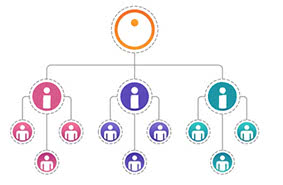
A composition must be organised into different paragraphs. In formal writing for publication (books, magazines, newspapers, etc.) every paragraph must be indented — the first line starts 3–5 spaces to the right of the rest. In other contexts, it’s more common to simply leave a blank line between paragraphs, which keeps them clearly separate without indentation (as you can see in this article).
Paragraphs group related ideas into units and must contain more than one sentence. The first paragraph begins with the opening sentence — it’s your introduction, your first contact with the reader, so put your most interesting, relevant or surprising information there to grab their attention or make the situation clear.
The last paragraph ends with the closing sentence — that’s your conclusion. Depending on what you’re writing, use this paragraph to explain the result, the conclusion of your reasoning, the climax of the story, or your personal opinion. (If you’re not sure how to end, giving your personal opinion is always an easy and safe option.)
From the points you defined in step 2, decide which ones work best for the first paragraph and which for the last. The rest go in one or more paragraphs in the middle — the “body” of the composition. Each paragraph can cover one or more points, but they must all share a common theme — and that theme must be clearly different from the themes of the other paragraphs. That’s what makes a paragraph feel like a unit.
Example — paragraph plan
Topic: Life in a village • Approach: better than cities
1 — Introduction: Opening sentence + the downside of city life. Starting with city problems makes the good things about villages sound even better later.
2 — Body: People — friendly, they know you, care about you, help you.
3 — Body: Nature — clean air, no pollution, contact with nature, beautiful landscape.
4 — Body: Way of life — cheaper, healthy entertainment, more exercise.
5 — Conclusion: One or two lead-in sentences building towards the closing sentence. For example, if the closing sentence is a look to the future (“I have decided to move to a village”), the previous sentences might explain how tired of city life you have become lately.
Step 7 — Write the composition

Now that you have your opening sentence, your closing sentence, your points and how they’re organised into paragraphs, it’s finally time to write. For most people, this is the only step they actually take — but for a good writer, it’s just the natural unfolding of a structure already in place, making it easy, fast and well-grounded.
It’s very important to use connectors to link ideas (although, nevertheless, that’s why, so, because, afterwards, in the first place, on the one hand, unfortunately, etc.). But remember: English doesn’t like long, complicated sentences. As a general rule, keep your sentences short — two or three elements at most (main clause + one subordinate or coordinate clause).
Example
Good sentence:
Cities are getting more and more aggressive, that’s why I’m thinking of moving to a village.
Clumsy sentence:
I don’t like cities because, after all the changes in modern societies, they are getting more and more aggressive and polluted, as everybody can see, although I know that on the other hand, life in a city offers more opportunities for some things such as jobs and entertainments, but the good things don’t compensate for the bad things, so that’s why I’m thinking of moving to a village, since life in a village is much better, natural and healthy than life in a city, especially big cities, which are still growing with more and more new people coming to live there.
A student might be impressed by the clumsy example, thinking that long, complex sentences prove a higher level of English — but in a composition, style matters just as much as grammar. On top of that, the clumsy sentence doesn’t even close properly for our topic. A native reader would find it too long, too complicated, too hard to follow — and frankly unpleasant to read. English likes its sentences short and clean. If you want to say everything the clumsy example says, break it into shorter, simpler sentences:
The same ideas, done right
“Everybody can see that, in modern societies, cities are getting more and more aggressive and polluted. It is true that, in big cities, the supply of jobs and entertainment is much bigger; nevertheless, the good things don’t compensate for the bad things. I really believe life in a village is much better, natural and healthy than life in a city — that’s why I’m thinking of moving to one.”
We’ve said exactly the same things using simpler structures. Connectors (underlined) show the relationship between ideas — they’re essential in any composition. But too many connectors make the text feel clumsy and overloaded. In the example above, we used just two for the whole conclusion paragraph. So balance the urge to show off your English with the need to show what a good writer you are.
Step 8 — Correct your composition
Leave time at the end to read your composition carefully — twice is usually enough; more than that and you may start second-guessing things. Remember: any mistakes you miss will be caught by the examiner, so try to spot them first. Read it as if you were the teacher marking a stranger’s work — you’ll be much more critical.
Important — planning is your best ally
Planning your composition is the best way to get a good result. It’s very hard to write a well-organised composition without planning first — and planning actually saves you time.
Suggested time split
You may need to adjust those percentages — practise and find what works for you. For a 30-minute exam, 5 minutes for planning is a good rule of thumb. And always save about 5 minutes at the end for corrections.
And if you think skipping the planning will save you time — think again. A good composition written in 20 minutes beats a bad one written in 40. Make the outline.
Further advice
- ✓Avoid contractions in very formal writing, but use them freely in informal pieces (a letter to a friend, for example).
- ✓Keep your writing tidy. If your handwriting is messy and you have time, write a rough draft first, then copy it out neatly.
- ✓If it’s handwritten, make sure your handwriting is legible.
- ✓If there’s a word limit, respect it. A variation of around 10% above or below is usually acceptable — but check with your teacher.
- ✓If there’s a time limit, keep an eye on the clock and make sure you hand in before it runs out.
- ✓With a word limit, don’t count every two minutes. Instead, write a few lines, count those words, and work out your average per line. If you average 10 words per line, a 120-word composition means 12 lines — mark those on your page and you’ll know exactly how much to write without constant counting.
- ✓If your teacher requires a precise word count, only start counting carefully when you’re near the end of your target number of lines. And ask how precise they want you to be.
Appendix — Connectors
Connectors are words used to link two sentences or ideas and show the relationship between them. They fall into two types: conjunctions and free connectors.
Conjunctions — join two sentences into one
I phoned you. + She came home. (two separate sentences)
She came home after I phoned you. (one sentence using a conjunction)
Free connectors — link two sentences but keep them separate
I phoned you. Then, she came home. (two sentences related by a free connector)
Free connectors can express the same relationship as a conjunction — just using two sentences instead of one. They sit between the two sentences, separated by a full stop before them and a comma after. Free connectors tend to sound more formal and elegant, which makes them ideal for written compositions.
Use connectors that suit your level. Here’s the same idea expressed three ways — from beginner to advanced:
Three levels
Beginner — conjunction (simple)
I like villages but I live in a city.
Intermediate — conjunction (more formal)
I like villages although I live in a city.
Advanced — free connector (elegant, ideal for formal writing)
I like villages. Nevertheless, I live in a city.
For more information about connectors:
- The compound sentence — connectors (grammar file)
- Grammar section — filter results by “connectors”
All the steps explained here work well for most kinds of compositions, but you may need to adapt some details depending on the topic. For example, if you are writing about the difference between city and countryside, everything said here is perfect. But if you are writing about your last holidays, the organisation of paragraphs (step 6) will usually follow a chronological order — so you don’t need to think carefully about where each point goes.
And that is the whole method. Eight steps that turn a blank page into a piece of writing with a shape: an idea to defend, points that support it, details that give them body, and an ending that seals the bottle. Plan first, write second, correct last — and what used to be the hardest part of an exam becomes the part you can rely on.
Written by Angel Castaño


